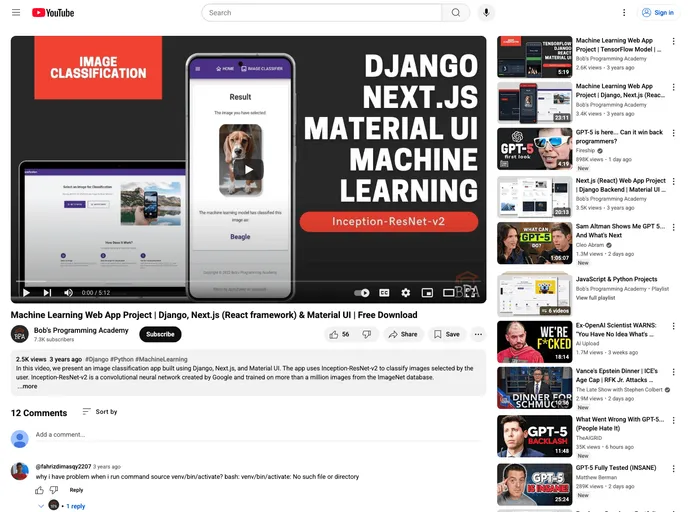
An image classification app built using Django 3, Django REST Framework 3, Next.js 12, and Material UI 5. The app uses Inception-ResNet-v2 to classify images selected by the user.
Overview
The Image Classification app is an impressive tool built on Django and Next.js that makes it simple for users to classify images effortlessly. Utilizing advanced machine learning techniques through the Inception-ResNet-v2 model, this app promises both functionality and ease of use for anyone looking to work with image data. With a user-friendly interface designed using Material UI, it makes navigating through features and customizing settings a breeze.
By following straightforward installation and customization steps, you can have this application up and running in no time. It’s a great choice for developers looking to integrate image classification capabilities into their projects or for users interested in testing out the capabilities of AI-driven image recognition technology.
Features
- Easy Setup: The application provides a clear guideline to install and run both backend and frontend, making it accessible for developers of all skill levels.
- Machine Learning Integration: Utilizes Inception-ResNet-v2 for effective image classification, ensuring high accuracy in identifying various images.
- Customization Options: Users can easily modify colors, fonts, logos, and text in various sections of the application through simple code adjustments.
- Modern Tech Stack: Built with Django 3, Django REST Framework 3, Next.js 12, and Material UI 5, ensuring a modern approach to web development.
- User-Friendly Interface: The Material UI design helps in creating an intuitive experience, making interaction within the app seamless and enjoyable.
- Comprehensive Documentation: Offers detailed instructions for installation, running the application, and customization, facilitating a smooth user experience.
- Open Source: Released under the MIT license, encouraging users to explore and make modifications as per their needs.
- Local Testing: Easily accessible via a local server, allowing users to test and refine their changes in real-time before deployment.